
Plant, Animal, and Life Science Research: Expanding the Scope of Modern Biosciences
Plant, Animal, and Life Science Research: Expanding the Scope of Modern Biosciences
Modern biosciences have evolved far beyond the traditional boundaries of biology. Today, research in plant sciences, animal sciences, and life sciences intersects with engineering, medicine, agriculture, environmental sustainability, computational sciences, and biotechnology. These interdisciplinary connections are reshaping how scientists understand living systems and how biological knowledge is applied to address some of humanity's most pressing challenges.
The growing importance of climate change, food security, emerging diseases, biodiversity conservation, precision agriculture, and sustainable healthcare has further accelerated the expansion of biosciences research. As a result, plant, animal, and life science studies now occupy a central position in global scientific innovation.
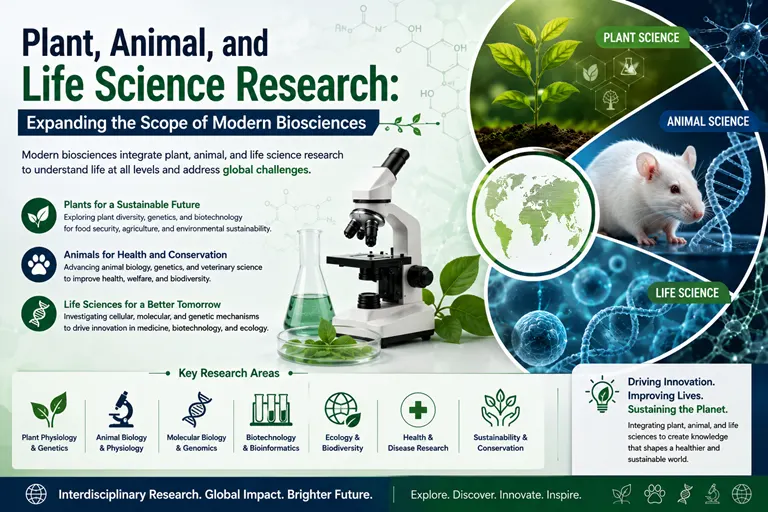
For journals dedicated to bioengineering and biosciences, these developments create exciting opportunities to publish impactful research that bridges traditional disciplines and contributes to scientific progress.
The Expanding Landscape of Modern Biosciences
Historically, biological sciences were divided into distinct disciplines such as botany, zoology, microbiology, genetics, and physiology. However, contemporary research increasingly emphasizes integration and collaboration across these fields.
Modern biosciences now encompass:
- Plant sciences
- Animal sciences
- Molecular biology
- Biotechnology
- Genomics
- Systems biology
- Bioinformatics
- Synthetic biology
- Environmental biology
- Computational biology
- Biomedical sciences
- Agricultural sciences
- Evolutionary biology
- Conservation biology
- Translational biosciences
This interdisciplinary approach allows researchers to address complex scientific questions that cannot be solved within a single discipline.
Why Plant Science Research Matters
Plants form the foundation of terrestrial ecosystems and play an essential role in food production, environmental sustainability, and human health.
Plant science research contributes to:
- Food security
- Crop improvement
- Climate resilience
- Sustainable agriculture
- Biofuel development
- Environmental conservation
- Pharmaceutical discovery
- Carbon sequestration
As global populations continue to grow, the demand for innovative agricultural solutions is increasing significantly.
Research in plant genetics, biotechnology, and molecular breeding is helping scientists develop crops that are more resistant to diseases, pests, and environmental stress.
Emerging Areas in Plant Science Research
Several rapidly growing research areas are transforming plant sciences.
These include:
- Plant genomics
- Genome editing technologies
- Precision agriculture
- Plant-microbe interactions
- Plant synthetic biology
- Stress physiology
- Agricultural biotechnology
- Crop bioinformatics
- Plant metabolomics
- Climate adaptation research
The integration of computational methods and biotechnology has opened entirely new possibilities for understanding and improving plant systems.
The Growing Importance of Animal Science Research
Animal sciences contribute significantly to agriculture, medicine, biotechnology, environmental sciences, and comparative biology.
Research in animal sciences supports:
- Livestock productivity
- Animal health
- Veterinary medicine
- Food security
- Reproductive technologies
- Disease modelling
- Drug development
- Conservation biology
Animal models also play an important role in biomedical research and contribute to understanding human diseases and therapeutic interventions.
Emerging Trends in Animal Science Research
Several innovative areas are reshaping animal sciences:
- Precision livestock farming
- Animal genomics
- Reproductive biotechnology
- Veterinary biotechnology
- Animal nutrition research
- Disease resistance genetics
- Animal welfare science
- Comparative medicine
- Microbiome research
- Conservation genomics
Technological advancements are enabling researchers to collect and analyze biological data with unprecedented precision.
Life Sciences as an Interdisciplinary Scientific Platform
Life sciences provide the scientific framework for understanding living organisms and biological systems.
Today, life sciences extend beyond classical biology and increasingly integrate with:
- Engineering
- Artificial intelligence
- Data science
- Nanotechnology
- Medicine
- Environmental sciences
- Computational modelling
This integration is creating entirely new scientific disciplines and expanding research opportunities.
Major Research Areas in Modern Life Sciences
Current life science research includes:
- Molecular biology
- Cellular biology
- Genomics
- Proteomics
- Metabolomics
- Systems biology
- Evolutionary biology
- Synthetic biology
- Bioinformatics
- Precision medicine
- Environmental sciences
- Regenerative medicine
The ability to combine biological knowledge with advanced technologies has significantly accelerated scientific discovery.
The Role of Biotechnology in Expanding Biosciences
Biotechnology has become one of the most influential drivers of modern biosciences.
Applications of biotechnology include:
- Agricultural improvement
- Vaccine development
- Gene therapy
- Biopharmaceuticals
- Environmental remediation
- Industrial biotechnology
- Personalized medicine
- Synthetic biology
Biotechnology research frequently draws upon plant, animal, and life sciences simultaneously, demonstrating the increasingly interconnected nature of biosciences research.
Bioengineering and Biosciences: A Natural Partnership
Bioengineering applies engineering principles to biological systems and often relies heavily on discoveries from plant and animal sciences.
Important interdisciplinary areas include:
- Tissue engineering
- Biomaterials
- Biomedical devices
- Biosensors
- Regenerative medicine
- Bioprocess engineering
- Synthetic biology
- Computational biology
- Agricultural engineering
- Environmental engineering
These fields demonstrate that modern biosciences are increasingly becoming problem-oriented rather than discipline-oriented.
The Role of Genomics and Omics Technologies
The emergence of high-throughput technologies has transformed biosciences research.
Modern researchers can now analyze:
- Whole genomes
- Transcriptomes
- Proteomes
- Metabolomes
- Microbiomes
These technologies generate enormous amounts of biological data and create opportunities for interdisciplinary collaboration between biologists, engineers, and computational scientists.
Computational Biology and Data-Driven Biosciences
The digital revolution has profoundly influenced biological research.
Computational tools now support:
- Genomic analysis
- Protein modelling
- Drug discovery
- Ecological modelling
- Evolutionary studies
- Systems biology
- Precision agriculture
- Disease prediction
Artificial intelligence and machine learning are increasingly being integrated into life science research and are expected to drive future discoveries.
Biosciences Research and Global Challenges
Plant, animal, and life sciences research contributes directly to addressing major global challenges.
These include:
- Food insecurity
- Climate change
- Emerging infectious diseases
- Biodiversity loss
- Environmental degradation
- Antimicrobial resistance
- Sustainable healthcare
- Population growth
Scientific solutions to these challenges depend heavily on interdisciplinary biosciences research.
Why Interdisciplinary Research Is Becoming Essential
Complex biological problems rarely fit neatly within a single discipline.
For example:
- Climate-resilient agriculture requires plant science, genetics, and computational modelling.
- Precision medicine requires molecular biology, genomics, and bioinformatics.
- Drug discovery involves chemistry, biology, engineering, and data science.
- Conservation biology increasingly relies on genomics and computational ecology.
Interdisciplinary collaboration is therefore becoming a defining feature of modern biosciences.
Publishing Opportunities in Plant, Animal, and Life Sciences
The rapid expansion of biosciences research has created significant opportunities for scholarly publication.
Research areas with growing publication potential include:
- Agricultural biotechnology
- Genomics and bioinformatics
- Microbiome studies
- Precision agriculture
- Synthetic biology
- Regenerative medicine
- Molecular diagnostics
- Environmental biosciences
- Computational biology
- Translational biosciences
Researchers working in these areas are generating innovative findings that require high-quality publication platforms.
The Importance of High-Quality Scientific Communication
Excellent research must be communicated effectively to achieve its full impact.
Researchers should focus on:
- Clear manuscript structure
- Strong methodology
- Accurate data presentation
- High-quality figures
- Proper statistical analyses
- Ethical reporting
- Transparent conclusions
Effective scientific communication accelerates knowledge sharing and supports scientific progress.
Emerging Opportunities for Young Researchers
The interdisciplinary nature of modern biosciences offers exceptional opportunities for early-career scientists.
Young researchers can contribute to:
- Climate-resilient agriculture
- Artificial intelligence in biology
- Sustainable biotechnology
- Precision medicine
- Genomic technologies
- Conservation sciences
- Synthetic biology
- Bioengineering innovations
The ability to work across disciplines is becoming increasingly valuable in modern scientific careers.
The Future of Plant, Animal, and Life Science Research
The future of biosciences will likely be characterized by:
- Greater interdisciplinary collaboration
- Increased use of artificial intelligence
- Advanced genomic technologies
- Precision agriculture
- Personalized medicine
- Sustainable biotechnology
- Data-driven biology
- Translational research
These developments will continue expanding the boundaries of biological research and create new opportunities for scientific discovery.
Soft Note for Researchers
The Journal of Development in Bioengineering and Biosciences welcomes high-quality original research, review articles, and interdisciplinary studies across plant sciences, animal sciences, biotechnology, life sciences, and bioengineering. Researchers working at the intersection of biological sciences and technological innovation are encouraged to contribute to the growing body of knowledge in these rapidly evolving fields.
Frequently Asked Questions
Why are plant and animal sciences important in modern biosciences?
They provide the biological foundations for advances in agriculture, medicine, biotechnology, environmental sustainability, and bioengineering.
Is biosciences research becoming more interdisciplinary?
Yes. Modern biosciences increasingly integrate biology with engineering, computational sciences, medicine, and environmental studies.
What are the major growth areas in life sciences research?
Major growth areas include genomics, bioinformatics, synthetic biology, precision medicine, biotechnology, and computational biology.
How does biotechnology contribute to biosciences?
Biotechnology applies biological knowledge to develop practical solutions in agriculture, medicine, industry, and environmental management.
Why is computational biology becoming important?
Large biological datasets require computational approaches for analysis, modelling, and scientific discovery.
Are there significant publication opportunities in plant and life sciences?
Yes. Rapid scientific advancements are creating substantial opportunities for high-quality research publication across multiple biosciences disciplines.
Conclusion
Plant, animal, and life science research continues to expand the boundaries of modern biosciences and plays a vital role in addressing many of the world's most significant scientific and societal challenges.
The integration of biological sciences with engineering, computational technologies, and biotechnology is creating innovative research opportunities that were unimaginable only a few decades ago.
As interdisciplinary approaches become increasingly important, researchers in plant sciences, animal sciences, and life sciences are uniquely positioned to contribute to future discoveries that improve human health, agricultural sustainability, environmental protection, and scientific understanding.
High-quality scholarly communication will remain essential in ensuring that these discoveries reach the global scientific community and contribute meaningfully to the advancement of modern biosciences.