
Translational Bioengineering: Bridging Laboratory Innovation and Real-World Healthcare Applications
Translational Bioengineering: Bridging Laboratory Innovation and Real-World Healthcare Applications
The ultimate goal of scientific research is not only to generate knowledge but also to improve human lives. In recent decades, bioengineering has emerged as one of the most influential disciplines capable of translating laboratory discoveries into practical healthcare solutions. From artificial organs and regenerative medicine to biosensors and personalized therapies, bioengineering is increasingly shaping the future of modern healthcare.
The concept of translational bioengineering focuses on converting fundamental scientific discoveries into technologies, therapies, devices, and interventions that directly benefit patients and healthcare systems. This process bridges the gap between laboratory innovation and real-world clinical applications.
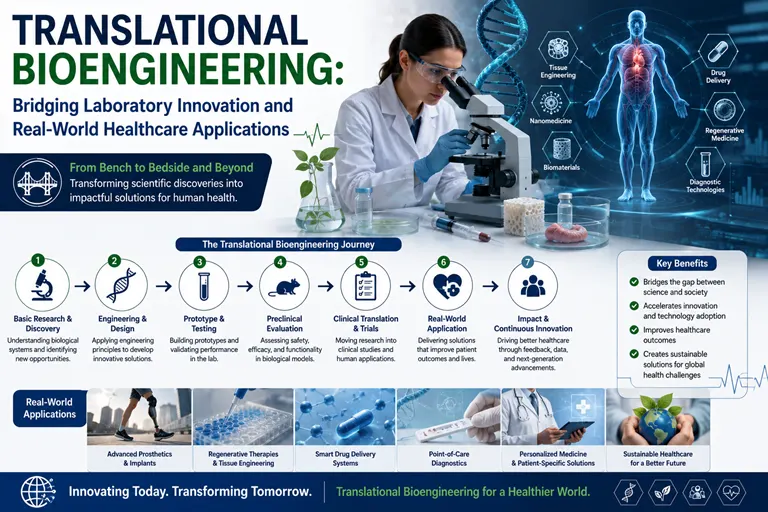
As healthcare challenges become increasingly complex, translational bioengineering is becoming essential for accelerating scientific discoveries and delivering solutions that improve diagnosis, treatment, prevention, and patient outcomes.
For journals dedicated to bioengineering and biosciences, translational research represents one of the most exciting and rapidly growing areas of scientific inquiry.
Understanding Translational Bioengineering
Translational bioengineering is an interdisciplinary field that integrates engineering principles, biological sciences, medicine, and technology to develop practical healthcare solutions.
The field seeks to answer an important question:
How can laboratory discoveries be transformed into technologies that improve patient care?
This process involves several stages:
- Basic scientific discovery
- Preclinical research
- Technology development
- Prototype design
- Clinical validation
- Regulatory evaluation
- Healthcare implementation
Translational bioengineering therefore serves as a bridge between scientific innovation and societal benefit.
Why Translational Research Matters
Many promising scientific discoveries never reach clinical practice.
The reasons may include:
- Technical challenges
- Limited collaboration
- Funding constraints
- Regulatory complexities
- Insufficient clinical validation
- Manufacturing difficulties
Translational research helps overcome these barriers by creating pathways that move innovations from the laboratory to real-world applications.
Successful translational bioengineering can lead to:
- Improved diagnostics
- Better treatments
- Reduced healthcare costs
- Enhanced patient outcomes
- Increased accessibility to medical technologies
The Growing Importance of Bioengineering in Healthcare
Healthcare systems worldwide face numerous challenges, including:
- Ageing populations
- Chronic diseases
- Emerging infectious diseases
- Rising healthcare costs
- Limited healthcare resources
- Demand for personalized medicine
Bioengineering offers innovative solutions to many of these problems.
Advances in engineering and biosciences are enabling researchers to develop technologies that improve disease detection, treatment, rehabilitation, and prevention.
Major Areas of Translational Bioengineering
Translational bioengineering encompasses numerous research domains.
These include:
- Biomedical devices
- Biomaterials
- Tissue engineering
- Regenerative medicine
- Drug delivery systems
- Medical imaging
- Biosensors
- Bioinformatics
- Artificial intelligence in healthcare
- Precision medicine
- Organ-on-chip technologies
- Wearable medical devices
- Digital health technologies
Each of these fields demonstrates how scientific discoveries can lead to practical healthcare innovations.
Biomaterials and Tissue Engineering
Biomaterials have transformed modern medicine.
Researchers are developing materials that can:
- Repair damaged tissues
- Improve implant performance
- Support wound healing
- Deliver therapeutic agents
- Enhance regenerative processes
Tissue engineering combines biomaterials, cellular biology, and engineering principles to create biological substitutes capable of restoring tissue function.
Applications include:
- Skin regeneration
- Bone repair
- Cartilage engineering
- Artificial organs
- Cardiovascular tissue engineering
These technologies have enormous potential to address organ shortages and improve treatment outcomes.
Regenerative Medicine and Stem Cell Technologies
Regenerative medicine represents one of the most promising areas of translational bioengineering.
The field focuses on repairing, replacing, or regenerating damaged tissues and organs.
Important areas of research include:
- Stem cell therapies
- Gene editing
- Cell-based therapies
- Tissue regeneration
- Organ engineering
Researchers are increasingly exploring methods that can stimulate the body's natural healing mechanisms and create personalized therapeutic approaches.
Medical Devices and Diagnostic Technologies
Bioengineering has significantly improved medical diagnostics and treatment technologies.
Innovations include:
- Implantable devices
- Biosensors
- Point-of-care diagnostics
- Smart prosthetics
- Wearable monitoring systems
- Surgical robotics
- Imaging technologies
These advances are improving early disease detection and enabling more precise interventions.
Drug Delivery and Therapeutic Engineering
Traditional drug administration methods often face challenges related to:
- Poor targeting
- Side effects
- Variable absorption
- Limited effectiveness
Bioengineering researchers are developing advanced drug delivery systems capable of:
- Controlled release
- Targeted delivery
- Personalized treatment
- Improved bioavailability
- Reduced toxicity
Nanotechnology and biomaterials are playing major roles in this rapidly evolving field.
Artificial Intelligence and Digital Healthcare
Artificial intelligence is increasingly integrated into translational bioengineering.
Applications include:
- Medical image analysis
- Predictive modelling
- Precision medicine
- Clinical decision support
- Disease diagnosis
- Drug discovery
- Personalized healthcare
The combination of computational technologies and biological sciences is accelerating healthcare innovation.
Organ-on-Chip and Advanced Disease Models
Traditional animal models do not always accurately predict human responses.
As a result, researchers are increasingly developing:
- Organ-on-chip systems
- Microphysiological systems
- Three-dimensional tissue models
- Human-derived disease models
These technologies provide more realistic platforms for:
- Drug testing
- Disease modelling
- Toxicity studies
- Personalized medicine research
They represent important examples of translational bioengineering because they directly improve the efficiency and reliability of biomedical research.
Precision Medicine and Personalized Healthcare
Modern healthcare is moving away from generalized treatment approaches.
Precision medicine seeks to provide:
- Individualized therapies
- Genomic-based treatments
- Personalized diagnostics
- Targeted interventions
Bioengineering contributes to precision medicine through:
- Biomarker discovery
- Genomic technologies
- Computational modelling
- Diagnostic devices
- Data-driven healthcare solutions
This approach has the potential to significantly improve patient outcomes.
The Importance of Interdisciplinary Collaboration
Successful translational bioengineering requires collaboration among:
- Biologists
- Engineers
- Physicians
- Pharmacologists
- Computer scientists
- Data analysts
- Regulatory experts
- Industry partners
No single discipline can independently transform laboratory discoveries into healthcare applications.
Interdisciplinary collaboration is therefore fundamental to translational success.
Challenges in Translational Bioengineering
Despite its enormous potential, translational bioengineering faces several challenges:
- Funding limitations
- Regulatory complexity
- Technology transfer barriers
- Ethical considerations
- Manufacturing challenges
- Clinical validation requirements
- Data management issues
Addressing these challenges requires coordinated efforts among researchers, institutions, industry, and policymakers.
Translational Bioengineering and Global Health
Bioengineering innovations can contribute significantly to global health challenges.
Potential applications include:
- Affordable diagnostics
- Low-cost medical devices
- Infectious disease monitoring
- Telemedicine technologies
- Point-of-care healthcare systems
- Personalized therapies
- Accessible rehabilitation technologies
These innovations have the potential to improve healthcare delivery in both developed and resource-limited settings.
Research Opportunities in Translational Bioengineering
The field offers numerous opportunities for researchers and students.
Emerging research areas include:
- Artificial organs
- Biomedical imaging
- Wearable biosensors
- Regenerative medicine
- Digital therapeutics
- Computational medicine
- Biomaterials
- Gene therapies
- Precision healthcare technologies
- Human disease modelling
The demand for interdisciplinary expertise in these areas continues to increase globally.
Publishing Opportunities in Translational Bioengineering
The rapid expansion of translational research is generating substantial publication opportunities.
Researchers can contribute to:
- Original research articles
- Review articles
- Short communications
- Methodological studies
- Translational case studies
- Interdisciplinary investigations
High-quality research in translational bioengineering has the potential to influence clinical practice, healthcare technologies, and future scientific developments.
The Importance of Effective Scientific Communication
Innovative research achieves its greatest impact only when communicated effectively.
Researchers should focus on:
- Clear methodology
- Strong experimental design
- Reproducible results
- High-quality figures
- Transparent reporting
- Evidence-based conclusions
Scientific communication plays an essential role in ensuring that translational discoveries reach healthcare professionals, researchers, and policymakers.
Soft Note for Researchers
The Journal of Development in Bioengineering and Biosciences welcomes high-quality research that advances translational bioengineering, biomedical technologies, regenerative medicine, biomaterials, computational biology, and interdisciplinary healthcare innovations. Researchers working to bridge laboratory discoveries and real-world healthcare applications are encouraged to contribute to this rapidly evolving field.
Frequently Asked Questions
What is translational bioengineering?
Translational bioengineering is the process of converting scientific discoveries into practical healthcare applications, technologies, and therapies.
Why is translational research important?
It helps transform laboratory innovations into solutions that improve patient care and healthcare outcomes.
What are the major areas of translational bioengineering?
Major areas include biomaterials, regenerative medicine, medical devices, biosensors, precision medicine, artificial intelligence, and organ-on-chip technologies.
How does bioengineering contribute to healthcare?
Bioengineering develops technologies, therapies, diagnostics, and medical devices that improve disease management and patient care.
Why is interdisciplinary collaboration important?
Successful healthcare innovation requires expertise from biology, engineering, medicine, data science, and other disciplines.
Are there growing publication opportunities in translational bioengineering?
Yes. The rapid growth of biomedical technologies and interdisciplinary research is creating substantial opportunities for scholarly publication.
Conclusion
Translational bioengineering represents one of the most dynamic and impactful areas of modern science. By connecting laboratory discoveries with real-world healthcare applications, the field is transforming how diseases are diagnosed, treated, and prevented.
From regenerative medicine and biomaterials to artificial intelligence and precision healthcare, translational bioengineering continues to expand the boundaries of scientific innovation and improve human health.
As global healthcare challenges become increasingly complex, interdisciplinary collaboration and translational research will play an even greater role in developing practical solutions that benefit society.
High-quality scientific communication and scholarly publication will remain essential for ensuring that these innovations reach the broader scientific and healthcare communities and contribute meaningfully to the advancement of modern medicine and biosciences.